*Please note that this campaign is for the purpose of recuperating costs for our vet expenditures from the previous year. As such, these are not restricted donations*
What is the campaign about?
This Giving Season, we wanted to shine a spotlight on an area of animal care that is vital, but often overlooked. We are, of course, referring to everything that goes into the vet care of the animals at our sanctuary!
This Includes:
– On-Site Vet Visits
– Emergency Vet Visits
– Spays, Neuters, & Associated Care
– Preventatives
– Necropsies
– Medications, Sedatives, & Darts
The purpose of this campaign is to try to recuperate the costs of our vet expenses for the year of 2025, while also giving our donors some insight into everything that happens behind-the-scenes at our organization!
Any donation, big or small, has a positive impact on these rescues’ lives. To learn more about the work we do at Wild Spirit Wolf Sanctuary to care for our beautiful rescues, we have broken down every portion of our vet care below and made it an educational experience for all.
Our total vet costs for this year was ~$117,081.66!
This total does not include the salary for our staff, the overtime paid for emergency vet visits, or the cost of care for the Indigo Mountain Nature Center rescues, as the previous facility had already covered those costs.
If you would like to donate to this campaign, you can do so by using the form to the left, or clicking any button on this page. 
On-Site Vet Visits:
Total Cost $19,461.73, which is 16.6% of our vet expenses
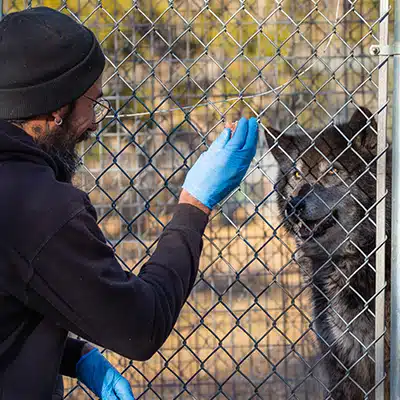
Every animal care organization regulated by the USDA has an attending veterinarian whose job is to be the primary source of care and advice for all animal-related needs.
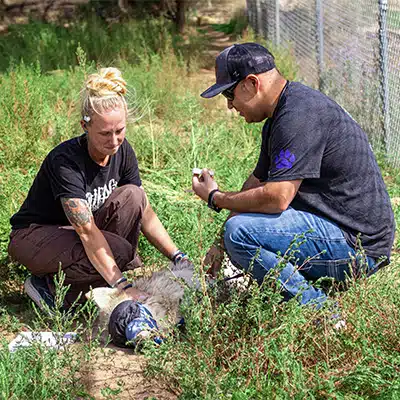
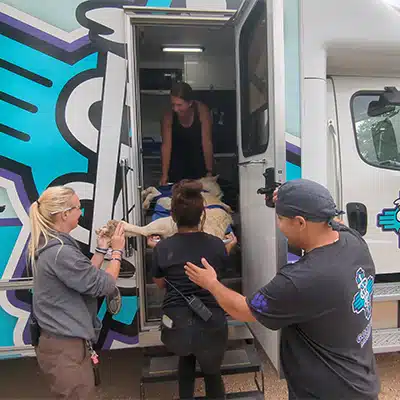
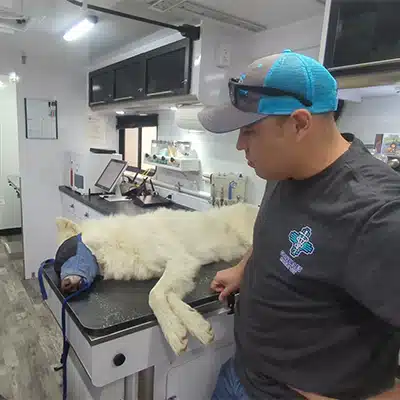
Wild Spirit Wolf Sanctuary is honored to work with Dr. Thomas Gonzales, who is the owner and founder of Gonzales Veterinary Services in Albuquerque, New Mexico. His mobile veterinary vehicle has been vital to our organization, allowing him to bring his rig to the sanctuary to complete vet care on site, including x-rays, surgeries, and more!
As a USDA facility, it is a requirement for every rescue on our property to receive a full physical exam annually, which can be quite the expensive and tricky endeavor with over 100 animals. It is even more difficult considering how remote our sanctuary is, which usually requires a 2-3 hour drive just to get a critter to a vet off-site!
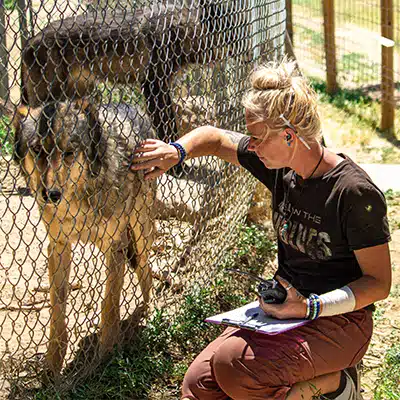
Instead of putting our rescues through that unnecessary stress, we call up “Dr. G”! We schedule anywhere between 3 – 6 on-site vet visits over the course of the year, whereby through the least stressful means for each animal, we are able to:
-
-
- conduct a full physical exam
- update vaccines
- review how our current treatments are performing
- examine rescues with new medical concerns
- provide surgeries as needed
- perform euthanasia should a rescue be at end of life
- AND MORE!
-
The vast majority of our rescues, approximately 85%, receive their vet care from Gonzales Veterinary Service. He has been our primary, attending veterinarian since September 30th, 2020, and even assisted with our needs prior to that date.
Dr. G has been a loyal and dedicated vet to the organization, and one many of us are privileged to not only call a colleague, but a friend. We highly recommend his services to anyone in the Albuquerque area.
Emergency Medical Vet Visits:
Total Cost $23,285.54, which is 20% of our vet expenses
This category includes any veterinary visits that do not occur on Wild Spirit property. Sadly, Dr. Gonzales is rarely available for walk-ins and emergencies, requiring our organization to explore other options in the Albuquerque or Santa Fe area.
While this may seem like a simple endeavor, we often run into issues finding vets who are comfortable working with our animals, let alone those that have the time to see us when emergencies arise. However, we consider ourselves incredibly lucky to have forged relationships with many veterinary practices nearby, who have always been willing to work alongside us to provide our critters with much needed care!
Their flexibility has allowed us to treat 12 animals this year, including Jethro, Cody, Katniss, Zayne, Kaya, Bowie, Blizzard, Sonoma, Merlin, Zion, and more!
We wanted to take the time in this section to explore a few of the medical emergencies we have had over the year, and the incredible staff who were willing to accommodate our rescues.

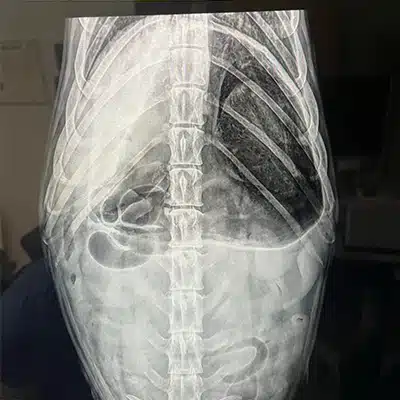

1. Kaya’s Bloat Surgery, August 2nd, 2025, total cost $105:
Our 9 year old mid-content wolfdog, Kaya, was observed by staff with a distended stomach and appeared to be in general discomfort. Whenever there is the potential for bloat, our staff has to move fast to capture/sedate the animal and get them on the road ASAP! Every second counts with bloat, as some animals can die within 1-2 hours if they don’t receive treatment.
Thankfully, we spotted early symptoms for Kaya, and were able to get her on the road in just 20 minutes, due to the quick actions of our staff. However, the real concern was the long drive to the vet.
This emergency occurred on a Saturday, which is when all the closest vet offices are closed. As a result, our only option was to take Kaya all the way to Albuquerque, a ~2 hour drive, where Petroglyph Animal Hospital was waiting to see her.
Knowing our girl, we had faith Kaya could make the trip, and sure enough, she was strong-willed enough to reach the vet! Once she arrived, they quickly tried to diagnose her, but the x-rays just weren’t providing enough information. The vets believed it was either intestinal torsion or gastric torsion, which is when the stomach begins to twist, and is the end stages of bloat. We were hoping for the latter, as our vet informed us that 75% of animals who have intestinal torsion are euthanized.
Luckily, when the vet began surgery, they were able to confirm that Kaya was in gastric torsion, with a stomach that was twisted 270 degrees. Though gastric torsion is no walk in the park either, the vet did state that this prognosis dramatically increased her post-surgery success rate! Thus, we proceed with the surgery and hoped for Kaya to pull through.
The surgery was a complete success, with the twisted stomach being corrected and a gastropexy was performed (attaching the stomach to the abdominal wall). Kaya was now out of immediate danger, but still had a difficult recovery ahead of her, which required keeping her in our recovery area to limit movement, modified meals that were small and spaced out during the day, as well as medications for appetite stimulation, antibiotics, and pain management.
Today, our darling Kaya is back to perfect health, and has returned to living with her companion, Obi! We truly couldn’t have saved her life without the incredible work of Petroglyph Animal Hospital, who even gave us an extraordinary discount on her vet care. Typically bloat surgery is approximately $8,000, yet Petroglyph only charged $105!
A huge thank you to their team for their generosity and commitment to helping our animals in their time of need.
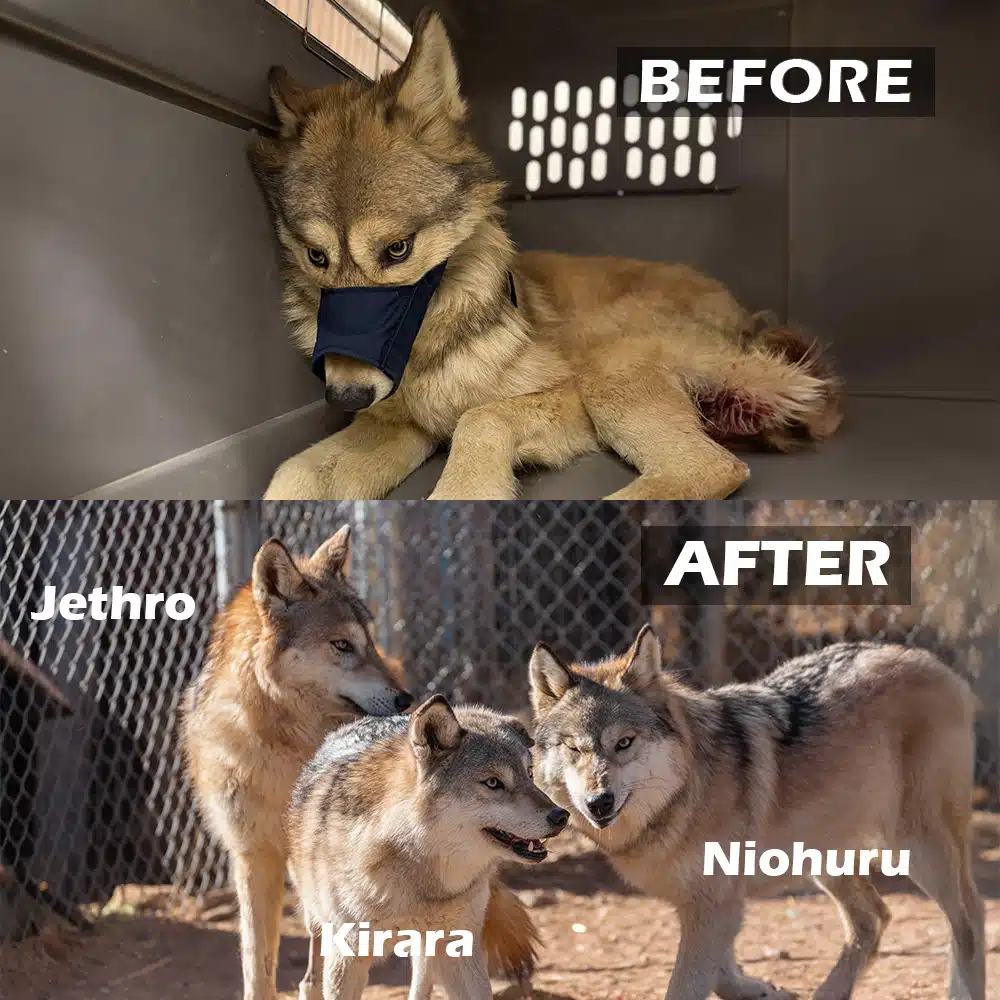
2. Jethro’s Wound Surgery, January 25th & 27th, 2025, total cost $1,629:
A new addition to our sanctuary, 8 month old high-content wolfdog, Jethro, was suddenly non-weight bearing on his back, left leg with blood visible. This was especially a surprise, because the little fellow had only arrived at our sanctuary 4 days prior, and he remained grouped with the siblings he grew up with at the Ohio Fur Farm he was rescued from.
The moment it was spotted, our team sprung into action, swiftly capturing him in under 30 seconds! From there he was crated and brought to one of the most reliable vet services in our area of New Mexico: Mosaic Animal Emergency and Specialty.
Jethro was the perfect little angel on his journey to Mosaic, and was quickly seen after he arrived. The vets discovered that the open wound on his leg was necrotic and infected, but due to the lack of damage to any bones, they were skeptical about the wound being caused by a bite; it was more likely that he had a small puncture from the metal cages at the fur farm, which became infected to the point that Jethro began to pick at it in irritation.
We were grateful that we were able to get Jethro treated in time; had he remained at the Ohio Fur Farm even a week longer, he likely would not be with us today. Instead, Mosaic went to work removing necrotic tissue, packing the wound, offering Jethro fluids, and getting him on antibiotics and pain management.
With that, Jethro was on his way home, but with quite the extensive care plan for our staff to take on. The first step was the cone of shame to prevent any further picking from Jethro, as well as monitoring the site to ensure it wasn’t getting worse. Then we placed him in our recovery area to monitor vitals and provided fluids as needed, and change the packing in the wound to keep it clean.
Unfortunately, on January 27th, Jethro’s vitals began to drop, including dipping into hypothermic conditions (96 degrees). We rushed him to VCA Veterinary Care Animal Hospital, and though they couldn’t find anything necessarily wrong, his vitals were still low and he was acting lethargic. He was kept overnight at the vet for monitoring and given ample fluids to keep his vitals in check. By the morning, he was back to normal vitals, and able to return back home. Baby Jethro eventually made a full recovery with his wound healing perfectly, allowing him to reunite with his sisters, Niohuru and Kirara.
Mosaic has always been there in our time of need, offering exceptional service and professional staff who never shy away from providing our animals with life-saving care. We also extend our gratitude to the VCA, as many vets don’t feel comfortable housing a wolfdog overnight, but they are one of the exceptions, and their willingness to do so played a large role in Jethro’s ability to recover.
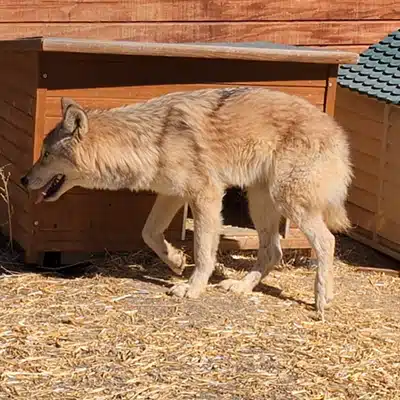
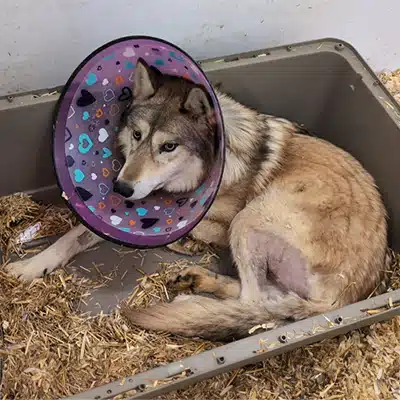
3. Merlin’s Foreign Body Surgery, Sept 10th, 2025, total cost $1,968:
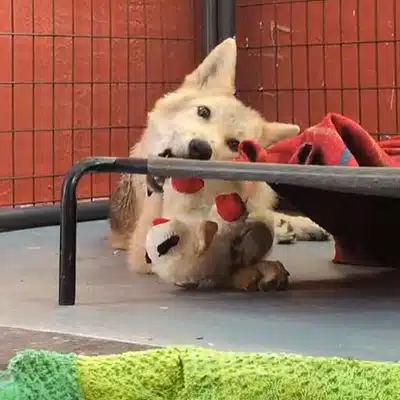
At the age of only 4 months old, Merlin–in true puppy fashion–decided that one of his toys looked at him the wrong way.
The punishment was complete obliteration, and to make sure he sent a message to the others, he determined that ingesting portions of the toy would serve as the perfect warning.
This became evident when Merlin started to vomit up pieces of the toy, a green snake stuffy, followed by a reluctance to eat. We decided the best course of action was to bring him to the vet, just to be on the safe side.
As luck would have it, the closest vet in our area, Cedar Animal Hospital in Gallup, was able to squeeze Merlin into their already busy day. With that, we loaded Merlin up into a crate and took the ~1 hour drive to Gallup to get him some x-rays.
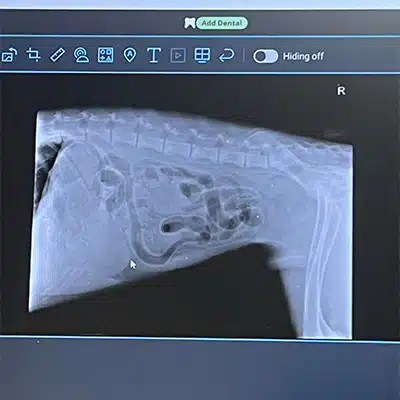
Unfortunately, the x-rays weren’t definitive, though they showed indication that there was a blockage. To take the least invasive route, the vet recommended keeping him overnight to monitor and reassess in the morning.
Sure enough, when morning came, we received a call from Cedar that informed us that the gases in his stomach had increased. We both agreed exploratory surgery would be the best course of action, and luckily, we were right!
The culprit was found: a squeaker from his toy, which they were able to remove via a fairly non-invasive approach of pushing it through his digestive tract.
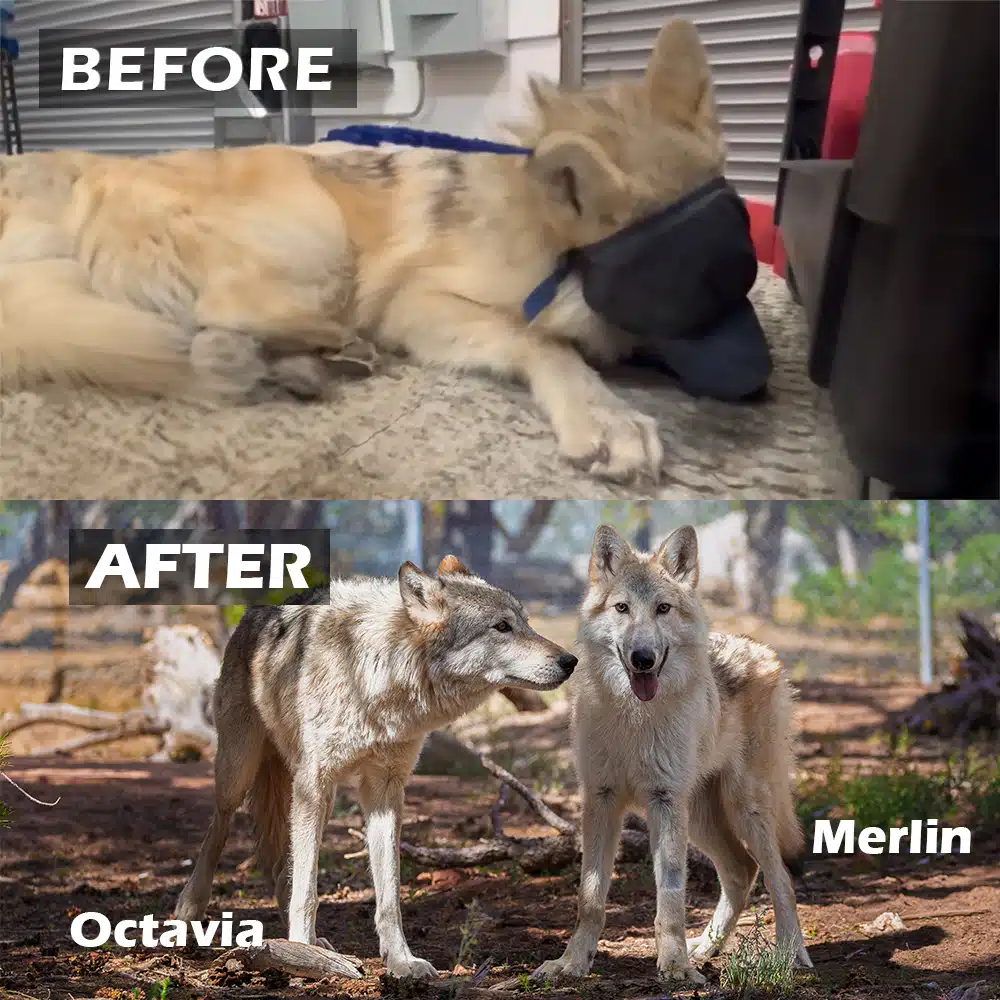
Merlin returned home the next day after recovering at Cedar. We monitored him closely in a small, confined enclosure, modified his diet into small meals, and gave him extra love to hasten his recovery.
It is fair to say that Merlin was removed from our stuffed toy list due to his naughty deeds, and we donated every toy in our possession that had a squeaker.
Cedar Animal Hospital is one of our favorite vet choices for a number of reasons. Their staff have always been willing to fit us into their extremely busy schedule in our times of need, and are willing to keep our silly puppies overnight when they pick a fight with their toys and lose.
Spays, Neuters, & Associated Care:
Total Cost $8,129.14, which is 6.9% of our vet expenses
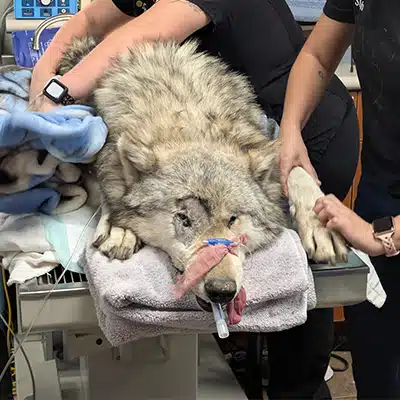
As a sanctuary who receives approximately 400 intake requests a year, we are more aware than most how oversaturated sanctuaries are, and the endless amount of wolfdogs who are being displaced without a place to go. For this reason, we ensure that we do not contribute to the problem by spaying and neutering all of our lovely rescues.
This was an especially difficult task given the sheer volume of rescues we took in this year, 45 in total, many of which were living in intact pairs prior to their rescue.
Thankfully, we have been absolutely spoiled this year by the generosity of many vet organizations, who have given us incredible discounts on spays & neuters.
The three vet clinics who conducted the majority of these procedures this year are:
- Valley Vet Co
- Zia Pet Hospital
- Petroglyph Animal Hospital
This allowed us to spay/neuter over 16 animals this year!
- Niohuru
- Kirara
- Cappy Chappie
- Hela
- Dorian
- Jethro
- Korah
- Okami
- Nova
- Gojira
- Gaia
- Mimi
- Milnor
- Ifria
- Buku
- Tioga
Typically, our spays and neuters cost around $600-$700 per animal, with spays being more expensive due to the more invasive nature of the surgery.
However, due to the unprecedented generosity from local vet clinics, we were only charged between $120 – $300 for every surgery (and in some cases, completely free)!
We would like to extend a massive thank you to all the veterinarians and their clinics who performed these surgeries at a reduced cost for our facility. We could not fulfill our mission without them, or you!



Preventatives:
Total Cost $50,685.80, which is 43.3% of our vet expenses
Every USDA regulated facility is required to provide preventatives to their animals, and we are no exception. Thus, we ensure that every critter who resides at our sanctuary receives year-round care.
This is easily our highest expense for our critters, because quality preventatives must be provided monthly, which adds up with over 100 animals! That’s over 1,200 tablets to distribute to our rescues each year.
However, the benefits greatly outweigh the cost, offering protection from:
- Fleas & Ticks
- Heartworm disease
- Roundworm
- Hookworm
- Mites
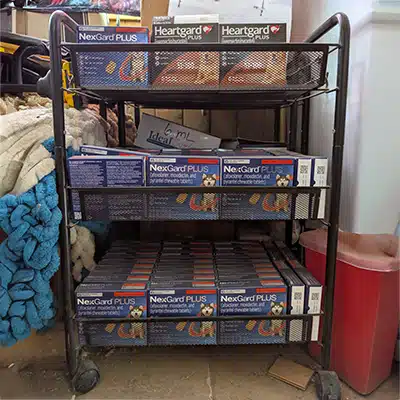
We use two primary brands for our preventatives:
- Nexgard PLUS
- Heartgard PLUS (used to provide a slow-kill treatment for heartworm positive animals)
The benefit of using these brands is the extensive research that has gone into their success and risks. They can be used with other medications, including vaccines, antibiotics, non-steroidal anti-inflammatory drugs (NSAIDs), anesthetics, sedatives, analgesics, steroids, anthelmintics, antiemetics, and antipruritics.
Additionally, side effects are minimal, and caution is only advised for canines with seizures or neurological disorders (though testing has not been conducted on breeding, pregnant, or lactating canines). As none of our rescues fall into these categories, it is the perfect choice for our needs.
Necropsies:
Total Cost $499.31, which is 0.4% of our vet expenses
While Wild Spirit Wolf Sanctuary strongly believes in assisting our animals when they are at end of life and have no further options for recovery, tragedies still occur that no one could foresee, but we are always dedicated to learning and improving.
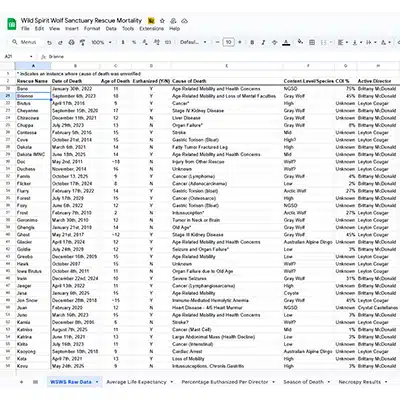
As such, our organization ensures that most, if not all animals who pass due to unknown circumstances, receive a necropsy to determine the cause of death and any other factors lurking beneath the surface.
This information is then used to increase our care standards if we discover a factor of our care that could have been improved to prevent the unfortunate passing of the rescue. This typically involves adding redundancies or further observation practices that might have allowed us to detect the problem in advance.
This can be particularly tricky with wolves and wolfdogs, who are such resilient animals that seldom show weakness, making it difficult to identify health problems until they escalate to a degree that the canine can no longer hide the symptoms. Regardless, if adding a practice will increase our chances of saving our animals by even 1%, we gladly do so!
The added bonus of performing necropsies on our animals is that there is very little research on wolfdogs in the scientific community, and our organization is blessed to have staff on hand experienced in conducting research.
We are currently performing a mortality study at our facility that we hope can be used to determine risk factors, establish trends, and find correlations that might allow canines all over the world to receive improved treatment in the future!
Medications, Sedation, & Darts:
Total Cost $15,020.14, which is 12.8% of our vet expenses
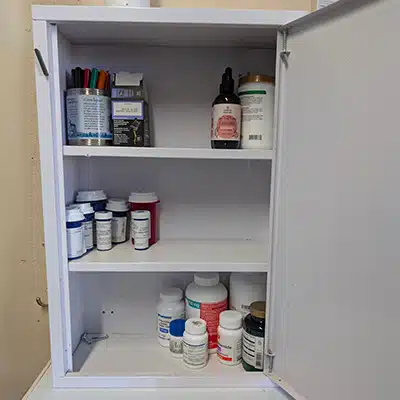
Due to wolves and wolfdogs living unnaturally long lives in captivity, which also results in a greater chance to develop health conditions, we strongly believe in providing our rescues with supplements, pain management, or any drug our vets recommend to keep them happy and comfortable.
We have many critters on property with different needs, including those with lupus, seasonal allergies, intervertebral disc disease (IVDD), hypothyroidism, and more, which is why our expenses for medication ramp up quickly.
Our most common medications/supplements that we supply to our rescues include:
- Gabapentin
- Carprofen
- Microlactin
- Loratadine
- Doxycycline
- Niacinamide
- Levothyroxine
- CBD Oil
We then present these medications to our animals in what we call “medballs,” usually consisting of ground beef, ground turkey, or a chicken drummy/cutlet.
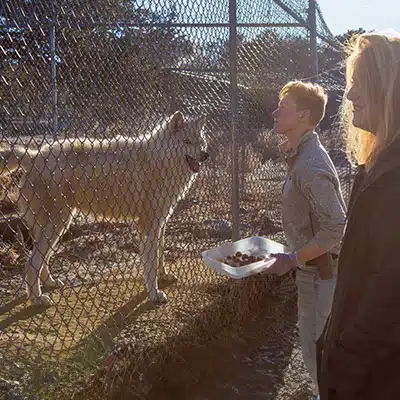
These medications are distributed to our rescues while we do our daily observations in the morning, afternoon, and/or evening depending on dosing instructions.
As for our sedation and darts, these are used to put our animals under who cannot be handled for physical exams, vet visits, transferring to other enclosures, or other niche circumstances.
For those that might not know, there are three classes of drug that are central nervous system depressants, but work in different ways:
1. Tranquilizers – induces a calming effect without affecting the central nervous system, though it can put a subject to sleep in high doses.
2. Sedatives – reduces a subject’s response and depresses the central nervous system. This causes stronger immobilization than tranquilizers, but also lowers heart rate and breathing.
3. Anesthetics – produces a lack of consciousness to cause the subject to be completely unresponsive.
We use a compound called BAM, which combines butorphanol (a light opiod), azaperone (a light tranquilizer), and medetomidine (a heavy sedative). Fascinatingly enough, while none of these drugs are anesthetics, in combination they are able to put the animal to sleep!
It is actually one of the few options that is effective against the high resistance wolves and wolfdogs have for drugs, with another common option being Telazol (a combination of an anesthetic and tranquilizer).
BAM is our go-to option, not only due to its effectiveness, but because it is one of the safest options for putting an animal under. This is because both medetomidine and butorphanol can be reversed, which will wake the animal if there are ever any concerns, and to avoid them being under for too long.
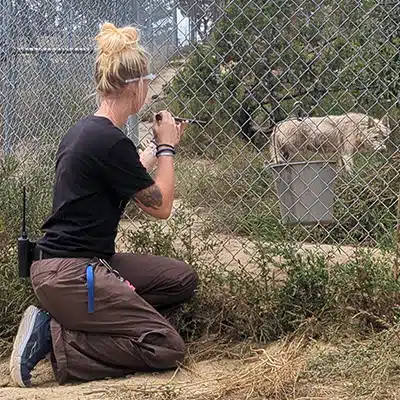
We have two main options for using this compound on our animals. The first is via hand-injections, and while this is our preferred route, it requires the animal to press against the fence to be injected voluntarily. We are working on training all of our animals to consensually present for an injection, but many of our critters come to Wild Spirit with intense fear or reactivity.
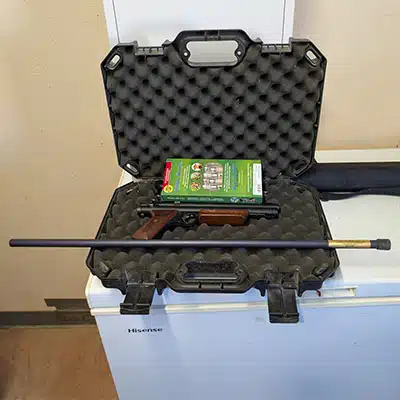
This leaves our second option, which is to dart our animals using a projector, such as a blow pipe, or blow gun. We purchase from a brand called “pneudart,” load our BAM into the dart, place it into our projector, and then put them under from afar to ensure both our safety, and theirs.
Thank You For Your Support!
Total Vet Costs for 2025 ~$117,081.66
2025 was a busy year, probably the busiest we have ever had. We rescued 45 new animals, almost doubled the amount of enclosures on our property, went on over 20 vet visits, and raised the bar for what our team could accomplish!
None of this could have been possible without our incredible supporters, who were there alongside us every step of the way. This Giving Season, we hope you will consider choosing us as one of the organizations you support, so that we can continue to give our animals the care, love, and security they deserve into the coming year!